
Headings and subheadings are like road signs, but they can be used only in a blog or article. They guide readers and help search engines understand your content. But how can you know where to use them or what the common mistakes are? In this article, we are going to explain what are headings and subheadings, and answer all your questions. So, get ready with your notebook and keep reading till the end.
What Are the Definitions of Headings and Subheadings?
Knowing what headings and subheadings are important. So here’s a definition with an example for you:
What Are Headings?
Headings are the titles or main sections of your content. They introduce new topics and make the text easier to scan.
In HTML, they are written as H1, H2, H3, and H4. The H1 tag is the main title of the page; on the other hand, the H2s and H3s are used for different sections.
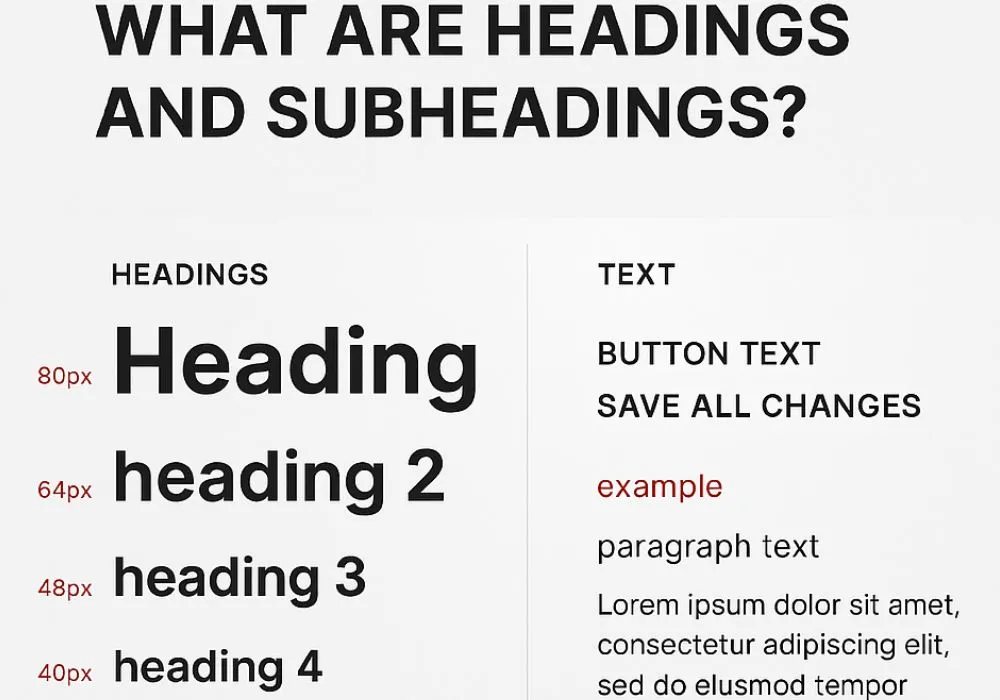
Example:
- H1: The title of a blog post. As an example, a title like What Are Headings and Subheadings in a Paper?
- H2: Main sections within the blog. The header, “What are the definitions of heading and subheadings?” is an H2.
- H3: Subsections under H2. A header like “What are headings?” is an H3 here.
What Are Subheadings?
Subheadings are used under headings that have more details. They help to manage all the information in a section.
Example:
If your H2 is “What Is SEO?”, your subheadings (H3s) could be:
- “On-Page SEO”
- “Off-Page SEO”
- “Technical SEO”

The Importance of Headings and Subheadings
Using headings and subheadings properly will improve your content. It helps in many other ways, too. To have extensive knowledge about all this to use in your brand, you may partner with a professional SEO agency like Sask SEO.
For now, let’s jump in and find out all the other benefits that you will get:
Better Readability
Nobody likes reading long walls of text. Headings and subheadings will break the content into pieces. Using this will only make it easier to read and skim.
Improved SEO
Search engines use headings to understand your content. A well-structured heading with keywords will help Google rank your page higher.
Increased Engagement
If you use clear headings, it will help you grab attention and keep readers engaged. When people can quickly find what they need, they stay longer on your page.
Makes Content Look Professional
Remember that well-organized content looks like a polished piece that has authority. It builds trust with readers and makes your site look more credible.

What Are the Best Practices for Using Headings and Subheadings?
We have gathered every piece of information for you regarding this topic. Here, take a look at these tips from experts:
Use a Clear Hierarchy
You should always start with H1 as the main title. Then, use H2s for major sections and H3s for subsections. Avoid skipping levels, like jumping from H2 to H4.
Keep Them Short and Clear
Remember that headings should be to the point. So, you should avoid using long and complex phrases. Try to keep them short so that people get your point clearly.
Include Keywords Naturally
Adding relevant keywords in headings helps with SEO. But don’t overstuff them. Because it shouldn’t look like you have forced it into the heading.
Make Them Engaging
People do not like anything boring. If you use boring headings, they don’t grab attention. So, use compelling and easy-to-read language. It will make the readers want to keep going.
Don’t Overuse Headings
Too many headings can be distracting for most readers. So use them only when necessary to organize content.

Conclusion
If you want your content to rank on Google, you should make it SEO friendly. SEO suggests that your content should be easy to read and skimmable. And here, you will get answers like, “What are headings and subheadings, and how do you use them?”
We expect that since you’re at the end of this blog, so, you’ve found all the answers that you were looking for. Still, if you’ve any more questions regarding this, make sure to contact a professional digital marketing team!